At the butcher, price tags glare back like warning lights, and the good steaks feel off-limits. Is there still a cut that feeds a family well without gutting the wallet?
The old butcher had hands like well-worn rolling pins. He slid a tray forward: thick rings of beef with a bone like a coin, the meat laced with nerves of silver. “No one asks for this anymore,” he shrugged, a half-smile, half-challenge, like he was letting me in on a small rebellion against expensive times.
It wasn’t pretty the way a ribeye is pretty. It was practical. It looked tough, yes, but cool and steady, the kind of meat that asks you to take your time and then pays you back with interest. He tapped the label: the price was almost shy, half of the fancy cuts beside it, a quiet bargain hiding in plain sight.
It was the beef shank.
The sleeper cut hiding at the bottom of the case
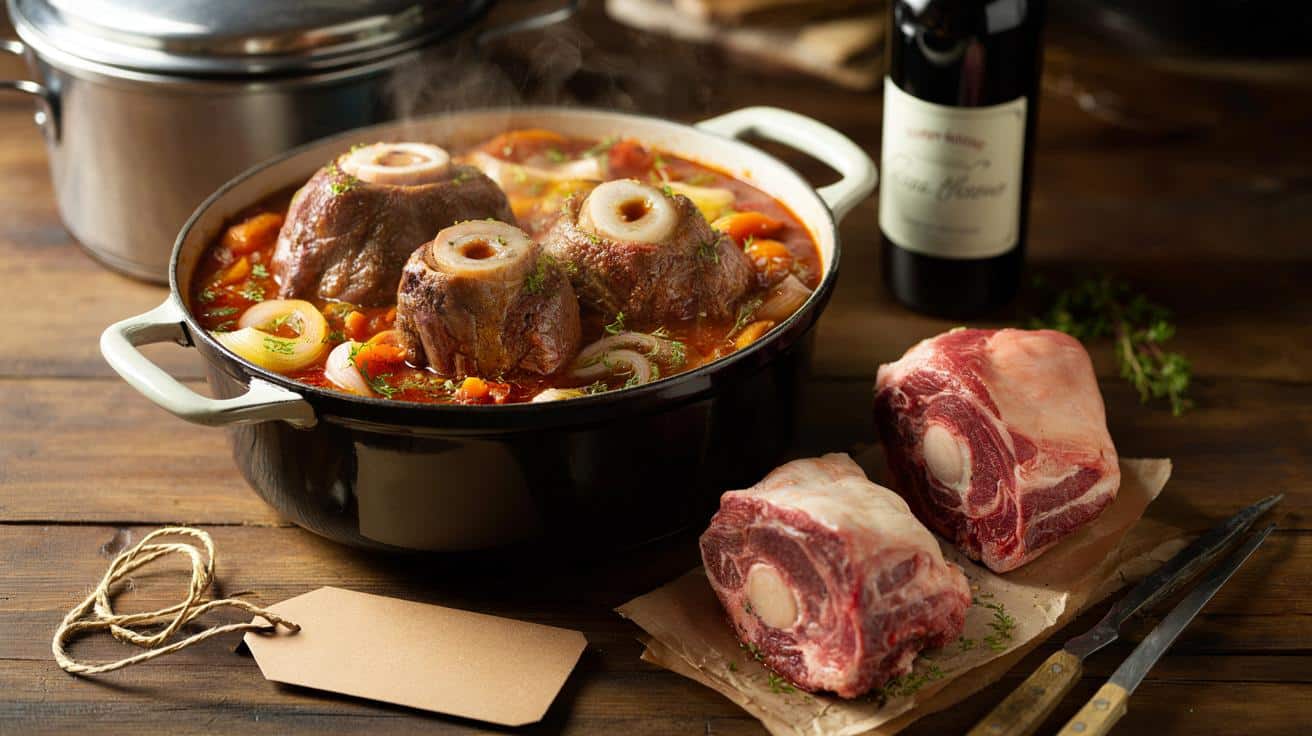
The cheapest cut hiding in plain sight is the beef shank. It’s the lower leg, sometimes sold cross-cut as osso buco, sometimes as long cylinders ready to be sliced. People skip it because it looks sinewy and lean, a far cry from glossy marbling.
That’s a mistake. The shank is dense with connective tissue that melts into silky gelatin when cooked low and slow. What looks like “tough” is really potential — the culinary version of a locked vault you can actually open. Once you learn the trick, your kitchen smells like a good bistro.
Let me give you a Tuesday-night story. A reader in Milan sent a photo: two shanks, a fist of carrots, one onion, a spoon of tomato paste, a splash of red wine. Ninety minutes in a pressure cooker, and the sauce clung to the spoon like velvet.
She said the shank cost less than half of what a ribeye would have, and it turned into dinner for four with leftovers. Oxtail gets all the hype — and the markup — while shank quietly costs less and performs like a classic. It tastes like you spent a fortune.
Here’s why it works. The shank is rich in collagen, the stuff that turns to gelatin when heated gently in moisture. That transformation is culinary magic: fibers relax, gaps fill with silk, and the liquid becomes glossy and lush.
If you rush it, the collagen stays stubborn and the meat chews back. Give it time, and you’ll swear it’s from a more expensive cut. Slice across the grain, let it rest in its own juices, and that “cheap” piece behaves like a prize.
How to cook it so it sings (for pennies)
Start a day ahead if you can. Salt the shank generously and chill uncovered overnight; the surface dries and browns better, and the seasoning goes deeper. Next day, get a heavy pot hot, add oil, and brown the shank until it’s the color of toasted bread.
Pull it out, drop in a chopped onion, carrot, and celery, and scrape up the browned bits. Stir in a spoon of tomato paste until brick red, then add a glass of wine and let it reduce. Nestle the shank back, add stock to come halfway up, thyme or bay, lid on, and braise at a lazy simmer — about 2.5 to 3 hours, or 45–55 minutes in a pressure cooker.
Little upgrades pay off. A splash of soy sauce or a chopped anchovy hits the umami button without advertising itself. Don’t drown it; the liquid should hug, not bury, the meat. We’ve all had that moment where dinner feels like a math problem — this is the antidote.
Common slip-ups? Using too much heat, not enough time, or stirring constantly so the meat shreds before it relaxes. Let it be. Skim some fat at the end, whisk a knob of cold butter into the sauce, and finish with lemon zest for lift. Let’s be honest: nobody really does that every day. Even one or two of those moves changes everything.
Here’s how a pro frames it:
“Tender is not a temperature. Tender is when the fork asks no questions,” my butcher said, turning the shank in its gravy like a slow planet.
- Season the day before for deeper flavor.
- Brown hard, then go low and slow in a snug pot.
- Add just enough liquid; reduce to glossy at the end.
- Finish with acidity: lemon, vinegar, or chopped capers.
- Shred leftovers for pasta, tacos, or soup.
Why this little cut matters in big times
Food inflation squeezes quiet habits hardest: the weeknight stew, the Sunday lunch, the plate you share without thinking about the bill. Shank makes those habits possible again without feeling like you stepped down in pleasure.
There’s something democratic about it. You invest time instead of money, and time has a way of giving back — smells drifting, a pot murmuring on the stove, plates passed around with a nod. This isn’t austerity cooking; it’s choosing depth over display.
Shank also bridges cuisines with ease. Italian osso buco with gremolata, French daube with orange peel, Chinese braises with star anise, Mexican guisado for folded tortillas. It adapts without losing itself. That’s the trick to eating well when prices feel high: find the cut that travels.
You can shop smarter without chasing bargains like a sport. Ask for shank at a counter that still sees whole animals; trim and bone vary, and some days you score the nicer round cross-cuts with marrow. Or go boneless and slice medallions — faster to braise, easier to portion.
Freeze the sauce in flat bags for quick wins. Boil pasta, toss with warmed shank ragù, and shower with parsley. Stir a ladle into beans. Spoon it over polenta and feel like a winter king. The cost stays quiet; the flavor does the talking.
| Point clé | Détail | Intérêt pour le lecteur |
|---|---|---|
| Beef shank = value | Often priced well below premium steaks and short ribs | Cuts the meat bill without cutting joy |
| Collagen to gelatin | Slow, moist heat transforms “tough” into silky | Restaurant-style texture at home |
| Batch-cook friendly | Braises freeze and reheat beautifully | One pot, many meals, less stress |
FAQ :
- What exactly is beef shank?It’s the lower leg of the cow, sold cross-cut with a round bone (osso buco style) or as a long boneless piece you can slice. Lean meat, lots of connective tissue, big flavor after a braise.
- How can I cook it fast on a weeknight?Use a pressure cooker: brown, deglaze, add stock and aromatics, then cook 45–55 minutes at high pressure. Reduce the sauce uncovered for a few minutes at the end.
- Does shank work for more than stews?Yes. Shred it for tacos, tuck it into sandwiches, fold it into risotto, spoon it over polenta, or add it to ramen broth. Think “base flavor” first, then play.
- Bone-in or boneless — which is better?Bone-in brings marrow and extra body to the sauce. Boneless cooks a bit faster and is easier to portion. Flavor is great either way; choose what fits your plan.
- How do I store and reheat it?Cool completely, portion with sauce, and refrigerate up to 4 days or freeze 3 months. Reheat gently with a splash of water or stock so the sauce stays glossy, not sticky.