Yet there’s a slice hiding in plain sight at the meat counter that costs little and eats like luxury. “Costa poco, ma vale oro,” as an Italian nonna would say. The hidden nugget isn’t fancy. It just sits near the rib section, almost shy, waiting for someone to ask for it by name.
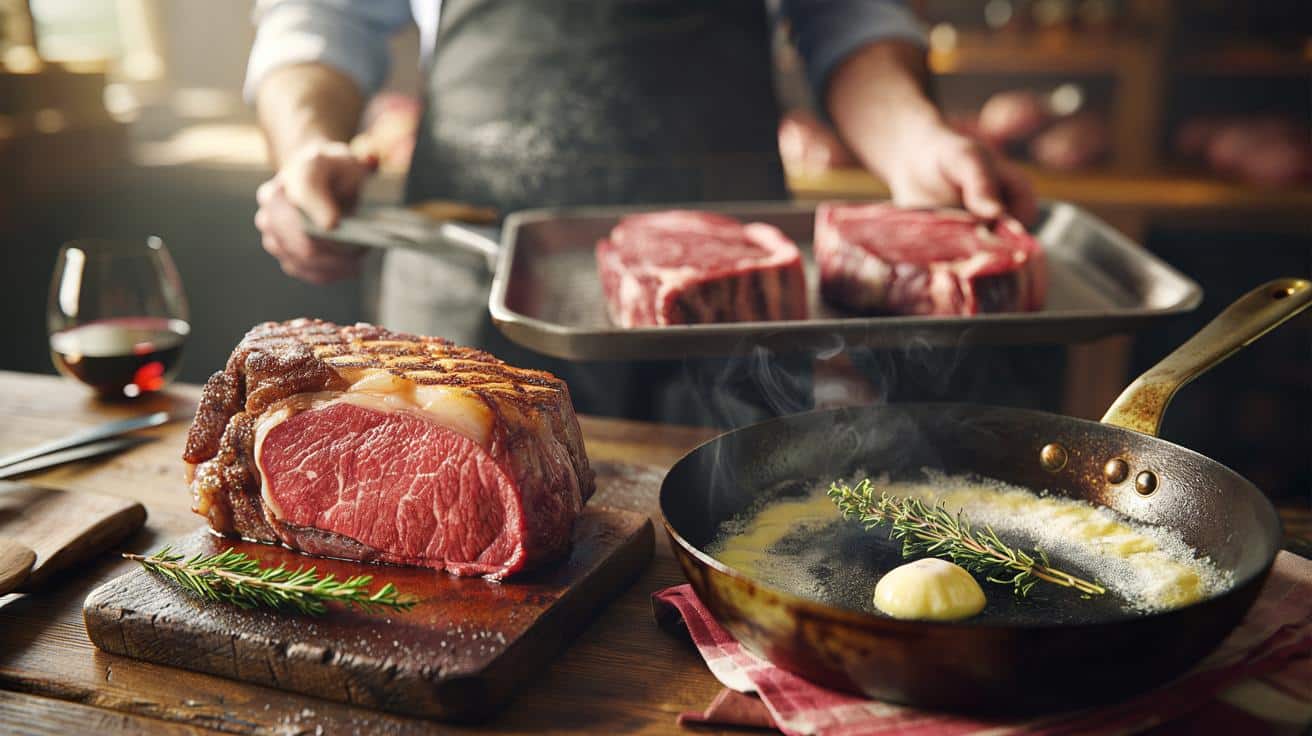
I was standing at the butcher’s, watching the usual parade of fillets and thick-cut ribeyes glide across the glass. A man in a flour-dusted apron leaned in and slid out a tray of steaks with marbling like lightning. “Chuck eye,” he said, almost conspiratorial. He cut two, thick as a thumb, and whispered: “Ribeye’s neighbour. Half the price.” That evening, the pan hissed, butter foamed, and the kitchen smelled like payday. My fork slid through with a sigh. The first bite brought that rich, round, Saturday-night flavour. It felt like cheating.
The steak that hides in plain sight
If you’ve never heard of the chuck eye, you’re not alone. It comes from the shoulder end of the steer, right next to where the ribeye lives. One or two steaks per animal, max. That’s why it’s scarce, and why it flies under the radar. **The chuck eye is cut from the same muscle family as ribeye, with marbling that melts in the pan and on the plate.** Close your eyes and you’ll swear you paid double.
We tried a low-key taste test at a backyard grill-up: two trays, one labelled “A” and one “B”. Guests raved about “A” for its beefy depth and buttery chew, then looked shocked when they learned “A” was the chuck eye. Around my town, ribeye hovers at £28–£34/kg. Chuck eye? £14–£18/kg when you can find it. That’s a quiet little revolution for a Tuesday night steak and a glass of red.
Why does it deliver like that? The chuck eye carries a seam of intramuscular fat and a few friendly connective tissues that render into gloss. The muscle fibres aren’t as fine as a ribeye, yet they’re close enough in structure to mimic that lush, mouth-coating feel. You get a steak that loves high heat, loves a rest, and loves being sliced against the grain. No wizardry. Just good anatomy.
Buying it, cooking it, loving it
Ask for “chuck eye steak” or “centre-cut chuck eye”, 2.5–4 cm thick. Salt generously 45 minutes before cooking so it dry-brines on the board. Pat dry, then hit a ripping-hot cast iron with a neutral oil. Two to three minutes per side for a deep crust, then drop in butter, a smashed garlic clove, and a sprig of thyme. Tilt, baste, breathe. Rest it on a rack for 8 minutes, then slice across the grain. *This is the kind of steak that makes weeknights feel like Friday.*
Common pitfalls? Overcooking is the big one. Take it off at 50–52°C for medium-rare; it will coast to 54–55°C. Don’t confuse it with generic “chuck steak” or “7-bone steak” which are better braised. You want the eye. You want thickness. And you want that rest. We’ve all had that moment when the pan looks perfect and patience evaporates. **Let it sit. That’s when juiciness is born.** Let’s be honest: nobody really does that every day.
There’s a rhythm to buying and cooking the chuck eye, and a butcher who knows you will help you find it.
“Tell me you want the ribeye’s neighbour,” my butcher says, “and I’ll cut it so it sings in your pan.”
- What to ask for: chuck eye, centre-cut chuck steak, Delmonico chuck, market steak.
- Ideal thickness: 2.5–4 cm; single steak per person.
- Best doneness: medium-rare to medium, sliced across the grain.
- Flavour friends: thyme, garlic, anchovy butter, peppercorn sauce.
- Pan choices: cast iron or grill with high direct heat.
Choose your moment, choose your heat, then let that marbling do the heavy lifting.
Why cheap cuts feel like a small miracle
The chuck eye changes how you look at the meat counter. On a tight week, it’s dinner that doesn’t feel like compromise. On a slow Sunday, it’s the anchor for a table full of potatoes, greens, and stories. It’s democratic, a little scrappy, and quietly generous. **Pay less, eat better, know your butcher.** That’s not a slogan. That’s a way of cooking that travels well across seasons and paydays.
It also nudges you into a more thoughtful loop. Shoulder muscles and nearby cuts are often overlooked, which means less pressure on the few luxury steaks everyone grabs by habit. Better for your budget and, frankly, kinder to the whole animal. You start noticing names: flat iron, Denver, bavette, tri-tip. Most came from the same curiosity that uncovers a chuck eye in the first place. Curiosity tastes great.
Some nights you’ll still crave a classic ribeye or a tender fillet. That’s fine. But when you want that rich, caramelised, steakhouse feeling without the steakhouse bill, the chuck eye sits there quietly, waiting. It doesn’t brag. It just delivers. The name might sound ordinary. The first bite won’t.
The open door after the first bite
Once you meet the chuck eye, you start noticing how many small, smart choices live on the edges. You begin to ask better questions at the counter. You pay attention to thickness, to marbling, to how a steak rests. You share a picture with a friend who swears it looks like ribeye, and you grin. The whole ritual becomes lighter, a little playful.
You might pair it with a watercress salad and lemon one week, then a peppercorn pan sauce the next. You might grill it hard over charcoal or sear it indoors when the rain hits. The outcome is the same: beefy, buttery, undeniably satisfying. And that feeling—that you found something real, not a trick—lingers. It’s the good kind of secret, hiding in plain sight.
| Point clé | Détail | Intérêt pour le lecteur |
|---|---|---|
| — | Cut identity: chuck eye (ribeye’s neighbour) from the shoulder end | Tastes like ribeye for far less money |
| — | Cooking method: hot sear, butter baste, proper rest, slice across grain | Replicable, steakhouse-quality results at home |
| — | Buying tips: ask for centre-cut, 2.5–4 cm thick; watch naming | Avoids duds; gets the exact steak you want |
FAQ :
- What exactly is the chuck eye steak?It’s a steak from the chuck primal, adjacent to the rib primal. It shares muscle with the ribeye area, which is why it tastes surprisingly rich.
- How do I make it tender?Buy it thick, salt ahead (45 minutes to overnight), sear hard, rest well, and slice across the grain. Medium-rare to medium keeps the texture plush.
- Can I dry-brine overnight?Yes. Salt, place on a rack uncovered in the fridge for up to 24 hours. Pat dry before cooking. The surface dries, browning improves, flavour deepens.
- What if my store only has “chuck steak”?Ask the butcher whether they can cut the chuck eye specifically. Generic chuck steak varies and may suit braising more than quick searing.
- Is it good for sous-vide or an air fryer?Sous-vide at 54°C for 1–2 hours, then sear in a hot pan. Air fryer can work in a pinch; finish in a pan for a proper crust.