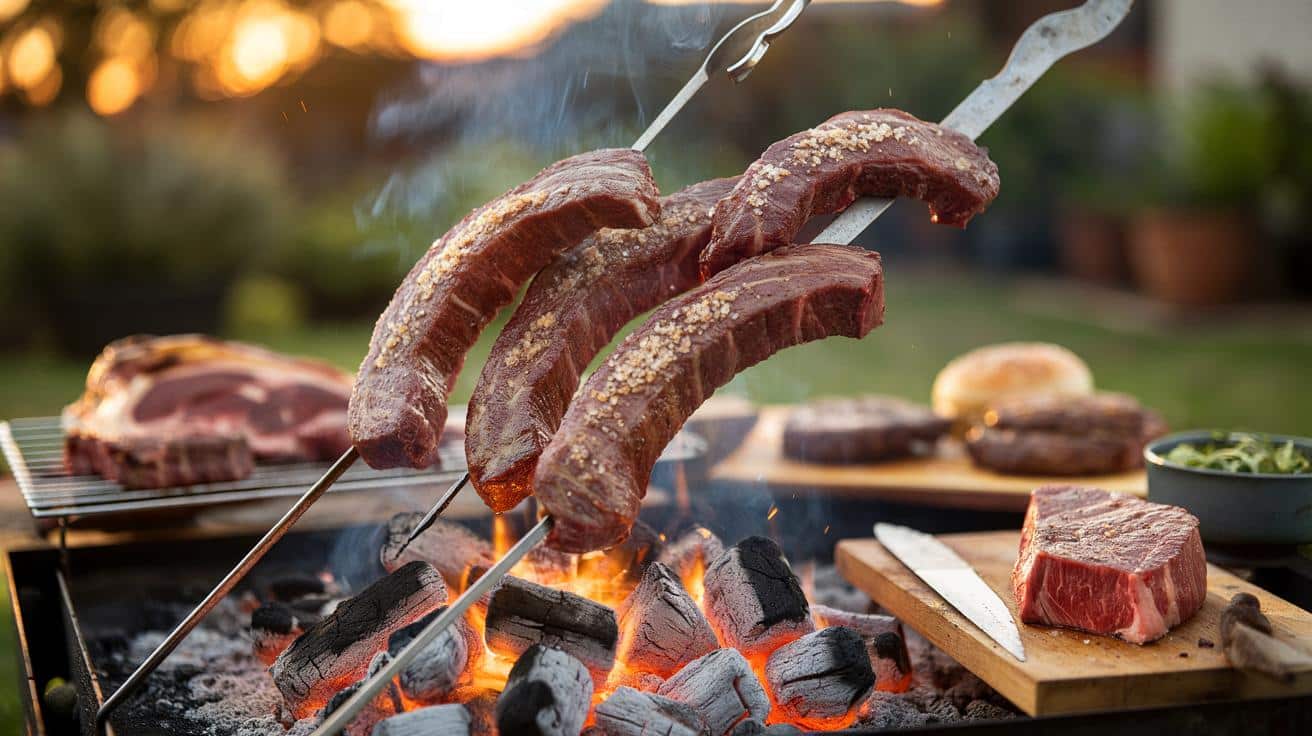
On the big grill, ribeyes flared and cooled, burgers hissed, and somewhere a kid ran past with ketchup fingers and a grin. At the corner, a quiet, triangular cut sat on skewers, searing, fat cap dripping and kissing the coals, sending out a perfume that had people drifting over without knowing why.
The guy tending it wasn’t flashy. No sauce mop, no gadget holster. Just coarse salt, a knife that had seen things, and a patience you could hear. He smiled as the crust turned glassy and brown, then flipped with a slow wrist. A couple of curious neighbors asked what the cut was, he just nodded toward the meat and said, “Taste.”
The best steak wasn’t a ribeye.
The overlooked champion on the grill
There’s a cut almost everyone walks past, even in good butcher shops. It goes by many names: picanha, top sirloin cap, rump cap, culotte. A simple triangle with a firm, creamy fat cap that looks old-school in the best way.
That fat cap is the trick. It renders, bastes, and shields the meat in the same breath. **Picanha is the best cut for the grill you’re not buying.** It sears like a dream on high heat, stays juicy even if your timing’s a little off, and costs less than the usual showpieces.
I watched a whole backyard go quiet over it. We sliced the picanha into thick crescents, skewered them into C-shapes with the fat on the outside, salted until it looked like a first snow, and cooked hot over live fire. People reached for it thinking they were grabbing sirloin, then did a little head tilt after the first chew. It’s tender in a way that feels earned.
Most U.S. stores break picanha into sirloin steaks, so it disappears before you see it. Ask the butcher for the cap whole—around 2 to 3 pounds, with the fat intact. Price varies by city, but it often comes in 20–40% under ribeye. In Brazil, they salt and go. No fancy marinade, no sweet glaze to burn. The result is beef-forward, mineral-rich, and balanced by that golden edge of fat.
Why it works is simple and a little nerdy. That external cap melts gradually, bathing the meat while insulating it from brutal heat. Inside, the fibers run in a clear direction, so you can cut across the grain after resting and keep every bite soft. On a two-zone grill, you can ride the hot side for crust, then finish over gentle heat while the fat keeps doing its thing. **Once you slice it right, even a cheap grill can turn out steakhouse bites.**
From butcher paper to perfect slices
Start with a whole picanha, 2 to 3 pounds. Keep the fat cap, but trim down to about 1/4 inch and lightly score it in a crosshatch so the fat renders and the surface doesn’t bubble. Decide how you want to cook: either cut it into 3 thick steaks, or slice into 1.5–2-inch strips and curve each into a C on a skewer with the fat facing out.
Salt generously—kosher or coarse sea salt—and let it sit uncovered in the fridge for 45 minutes to overnight. Heat the grill for two zones: ripping hot for searing, a cooler side for finishing. Sear fat side down first until it crackles and browns, then sear the meat side for color. Move to the cool zone and cook to 125–130°F in the thickest part for medium-rare. Rest 8–10 minutes. Slice across the grain.
Mistakes? Easy ones. People shave off the fat entirely, then wonder why it’s just “good sirloin.” Or they cook it like a brisket, low and slow until it dries out. Some slice with the grain, turning butter-soft meat into chewy strips. If you season with sweet sauces early, they’ll char before the inside is ready. We’ve all had that moment when dinner goes gray and overdone and you pretend it’s fine.
Be kind to yourself. Picanha gives you a buffer—not perfection, a buffer. Let it teach you. Let it drip. Let it sing over the flames. Let’s be honest: nobody really does that every day.
Here’s what a butcher once told me as the sawdust settled around us:
“If you leave the cap on and slice against the grain, picanha behaves like a great steak and a self-basting roast at the same time. You don’t fight it—you let it do what it wants.”
- Target thickness: 1.5–2 inches for steaks or C-shaped skewers.
- Season: coarse salt, pepper if you like, garlic after the sear—not before.
- Heat: hard sear, then indirect until 125–130°F inside.
- Rest: at least 8 minutes; the fat keeps working off heat.
- Slice: identify the grain line first, then cut across in thin, proud slices.
Why this “ignored” cut sticks with you
Picanha isn’t flashy until it hits the grill. Then the geometry turns theatrical: that curve on the skewer, the glistening cap, the way the crust snaps under the knife. You slice, the juice pools, the table leans in. It feels like a discovery, even if it’s a weekday backyard and not a Rio steakhouse.
What you’re tasting is balance. Big flavor without heaviness. Texture that gives way, not bounces back. The fat cap brings drama, but the meat carries the tune. It plays nice with smoke from lump charcoal, but it’s just as happy on a gas grill with a preheated cast-iron griddle. If you only salt it, you’ll taste the grass and the mineral. If you add black pepper and a little garlic, it goes savory and warm. If you want chimichurri or salsa verde, it won’t argue.
This cut doesn’t need a marinade to sing.
There’s also the tiny thrill of beating the system. You didn’t buy the most expensive steak in the case, yet you’ll get the plate people remember. The leftovers are generous: cold slices over rice with lime, tucked into tortillas with charred scallions, or piled on a buttered roll with crunchy pickles. If anyone asks what it’s called, give them the names—picanha, rump cap, culotte—so they can find it. Give them the trick about the fat. Give them the sense that griddling good meat is less about swagger, more about timing and patience.
And yes, try it with only salt once. See if the table falls quiet at the same time again.
| Point clé | Détail | Intérêt pour le lecteur |
|---|---|---|
| The cut to ask for | Picanha (top sirloin cap, rump cap, culotte), 2–3 lb, fat cap on | Know exactly what to buy, even if it’s hidden in the case |
| Cook method | Score fat, heavy salt, two-zone grill, 125–130°F, rest, slice across grain | Repeatable steps for steakhouse results at home |
| Why it wins | Fat cap self-bastes, forgiving texture, bold beef flavor, better value | Big payoff in taste and cost, fewer chances to mess up |
FAQ :
- What if my store doesn’t label “picanha”?Ask for top sirloin cap, rump cap, or culotte, whole with the fat cap. If they only have sirloin steaks, request the cap before it’s broken down.
- Should I remove the fat cap for health or flare-ups?Keep a 1/4-inch layer and score it. Render over direct heat, then finish indirect to manage flames while keeping flavor.
- What grill temperature works best?Hot-and-fast to sear—aim for grate temps around 500°F—then move to a cooler zone to cruise to your target internal temp.
- Can I cook picanha without a grill?Yes. Sear in a hot cast-iron pan fat side down, flip for color, then finish in a 275–300°F oven until 125–130°F inside. Rest and slice across the grain.
- How do I reheat leftovers without drying them out?Warm gently in a skillet with a spoon of beef fat or butter, or serve cold and thin with a bright sauce like chimichurri or salsa verde.