Everyone crowds the butcher’s case for ribeye and strip, leaving a dark, lean, magnificent cut behind. The name spooks people. The price whispers opportunity. Barbecue season is here, and the meat nobody wants might be the best thing you’ll put over fire all year.
A couple glanced over, grimaced, and moved back to the comforting marbling of ribeye. He shrugged, sliced a clean slab, and said to me: “Treat it like steak. Blaze-hot grill. Fast. Thin. You’ll hear it sing.”
That afternoon, the sun was low, the coals were white, and the first strip of heart hit the grate with that urgent, sticky sizzle only high heat can write. The smell was mineral and sweet, the color turning from burgundy to a rare, wet blush in seconds. I sliced, passed a piece to a skeptic, and watched their eyebrows jump. The heart forgives nothing. The heart rewards everything.
It loved fire.
The steak hiding in plain sight
Beef heart is the steak your butcher is hoping you’ll finally ask about. Firm, springy, shockingly lean, it behaves like a respectful cousin of skirt and hanger. On the grill it sears fast, stays juicy, and carries smoke like a secret. You don’t need to mask it with tricks. Salt, flame, and a squeeze of citrus are enough.
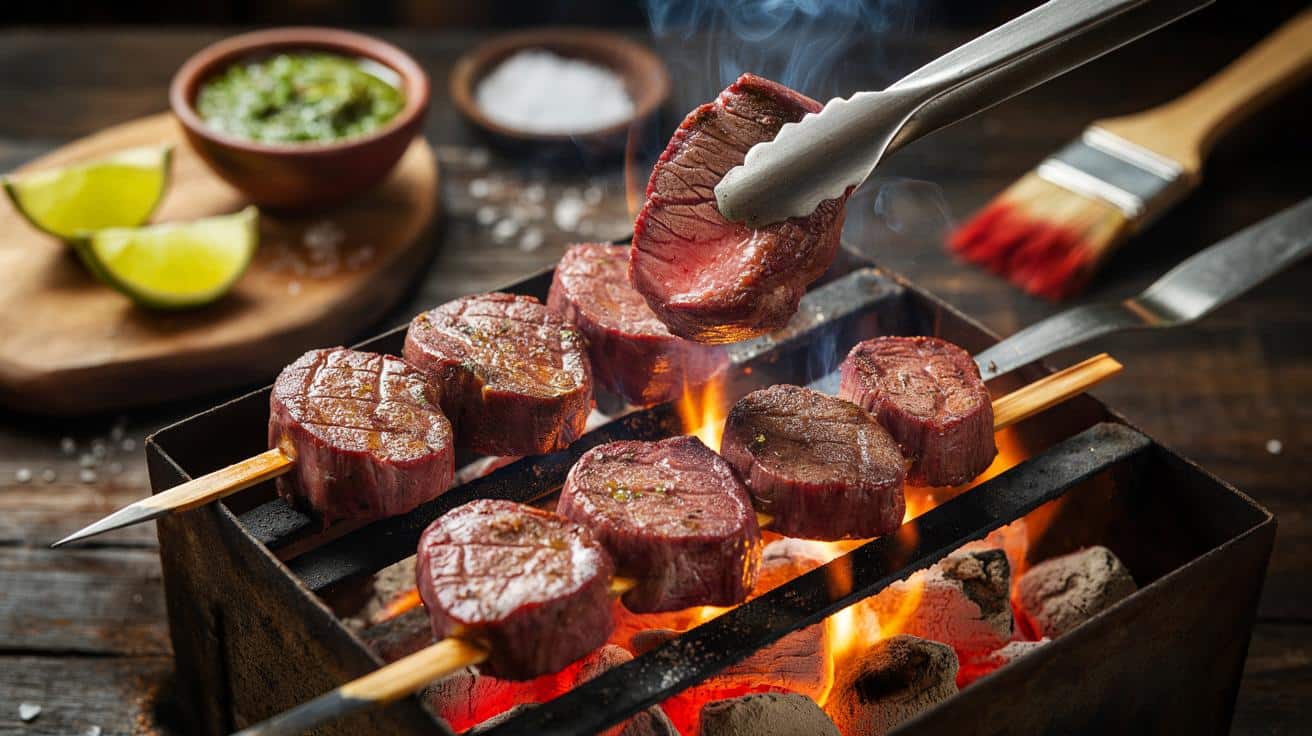
Beef heart is the steak hiding in plain sight. If price matters to you, this is where things get interesting. In many cities it runs a quarter of the cost of prime ribeye, even as groceries climb. That makes it the one cut you can serve to six friends without gulping. Think Peruvian anticuchos: garlic, vinegar, warm chilies, blistering heat. A few minutes of work, a few minutes of fire, and skewers disappear faster than you can flip them.
Most of us hesitate because the word “heart” feels intimate. We picture anatomy, not dinner. But it’s muscle, just like the muscles we already grill, with long, hardworking fibers that turn into something special under blistering heat. Those fibers mean chew in the best way — a steak you slice thin and savor. If you care about less waste and more flavor per dollar, this cut makes both feel normal.
How to grill it so it sings
Trim lightly. You want to remove silver skin and any obvious fat or valves, then butterfly the larger lobes so they lay flat. From there you have two paths: quick steaks, about half an inch thick, or strips for skewers. Either way, a simple marinade helps — vinegar or lime, garlic, cumin, a mild chili like paprika or ají panca, and a splash of oil. Go hot-hot: a grate that hurts to hold your hand over. Sear 60 to 90 seconds per side for steaks. Rest. Slice against the grain.
Two mistakes tend to ruin the party: overcooking and timid heat. Heart dries when left on the grill too long, so aim for rare to medium-rare, then let carryover warmth finish the center. Salt at the end if your marinade was salty; at the beginning if you kept it simple. We’ve all had that moment when the grill flares and panic sets in. Breathe, move the meat to a cooler zone, then finish with confidence. Let’s be honest: nobody really does that every day.
Think of sauces as friendly backup singers, not lead vocalists. Chimichurri, a bright parsley-cilantro number, or a creamy huancaína on the side — both make the minerality glow. Balance smoke with acid. Contrast lean with fat. If doubt creeps in, remember the butcher’s line: fast, hot, thin.
“Treat heart like skirt steak: blister it, rest it, and slice it thin. The flavor’s already there.”
- Trim to remove silver skin; keep pieces even in thickness.
- Marinate 30 to 90 minutes; don’t drown it overnight.
- Grill at maximum heat; target 125–130°F in the thickest spot.
- Rest 3 to 5 minutes; slice firmly against the grain.
- Finish with coarse salt, lime, and a green herb sauce.
Why this “unwanted” meat could change your barbecue
Once you grill beef heart, the word stops being a barrier and becomes a story. You start talking about texture instead of fear, about value instead of scarcity. You serve a plate that looks like steak, smells like steak, and yet tastes like something newly honest. It cooks like a steak because it is one.
There’s also the quiet satisfaction of using more of the animal. Not in a preachy way. In a practical, delicious way that keeps barbecue surprising and a little rebellious. You’re not chasing the same cuts as everyone else. You’re choosing flavor and skill over labels and comfort. Your friends will talk about the skewers first, then ask what it was.
Once you try it, the ribeye can wait. Maybe not forever. Maybe just on the nights when you want to grill with nerve, spend less, and eat something that tastes like a secret you just uncovered. That’s a good habit to keep around the fire.
| Point clé | Détail | Intérêt pour le lecteur |
|---|---|---|
| Cut to know | Beef heart, trimmed and sliced thin | Affordable, flavorful, grills like steak |
| Cooking rule | High heat, short cook, rest, slice against grain | Tender results without guesswork |
| Flavor play | Acidic marinades, bright green sauces, citrus finish | Balances minerality, keeps bites lively |
FAQ :
- What does beef heart taste like?Think steak with a slightly deeper, iron-rich note, closer to hanger than to liver. Not funky, just proud.
- How do I make it tender?Trim silver skin, slice thin, cook hot and fast to rare or medium-rare, then slice against the grain. That’s the tenderness trifecta.
- Can I pan-sear instead of grilling?Yes. Cast-iron on high heat with a little oil works beautifully. Vent the kitchen and keep the sear short.
- How long should I marinate?Thirty to ninety minutes is the sweet spot. Enough to season, not so long that acidity toughens the surface.
- Where can I buy beef heart?Ask a real butcher or a Latin/Asian market. If you don’t see it, request it — many shops keep it in the back.