Behind me, the queue breathed garlic and late-afternoon heat, the hum of a street about to light a hundred grills. He leaned in and gave me the kind of advice that travels from backyard to backyard faster than smoke: forget expensive cuts, and treat the cheap ones like royalty. The room smelled of lemon zest and raw beef, of secrets and savings. Out on the pavement, a kid tugged at a string of skewers like they were trophies from summer. The butcher smiled, a crescent under the neon, and said the line that keeps replaying in my head when coals go white and people start to gather. His trick costs less than a bottle of sauce.
The cut that changes the cook
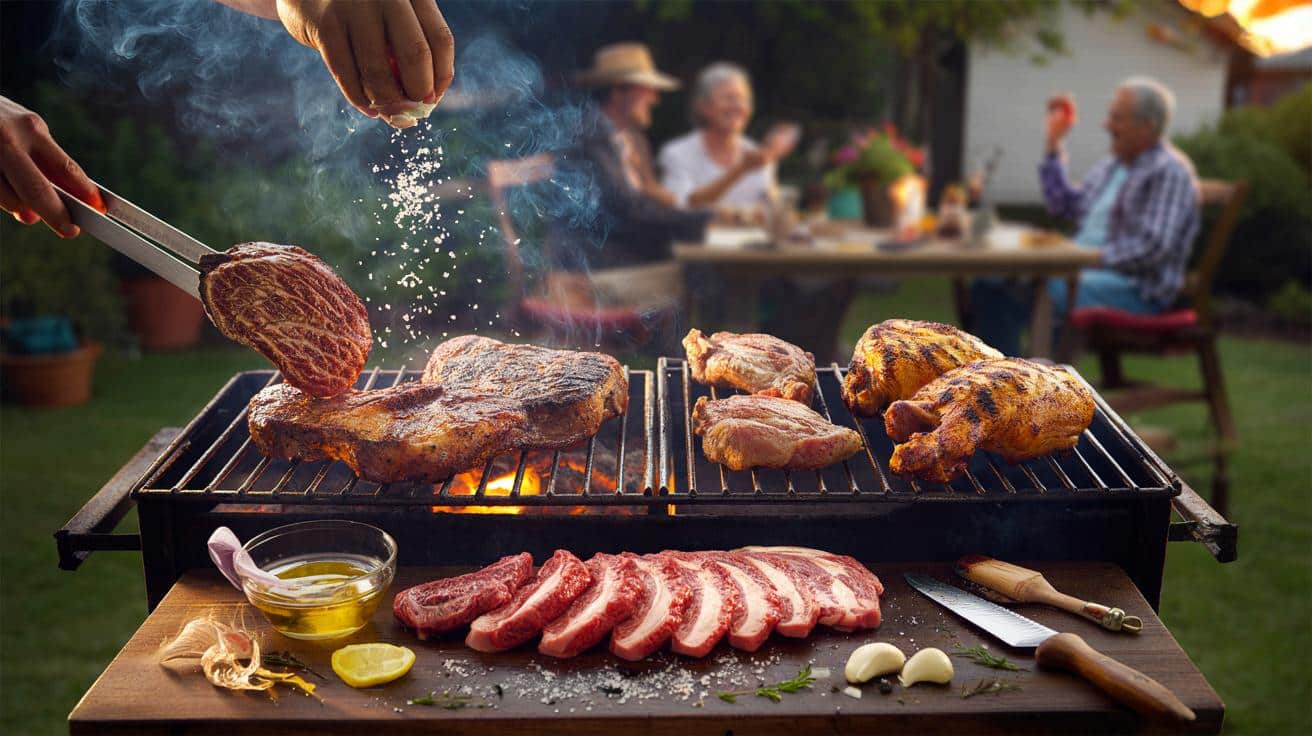
Ask a butcher where flavour hides and they’ll steer you away from the glassy, premium steaks. It lives in the working muscles, the unfashionable bits with character. Think bavette (flap), picanha (sirloin cap), chuck eye, pork collar, chicken thighs with skin. These cuts don’t perform for the camera; they perform on the fire. They’re the pieces that forgive you if the charcoal flares for a moment, that stay juicy even after a longer chat at the table. **Buy shoulder, not loin.** Your budget breathes, your grill sings, and nobody misses the fancy label.
I watched a neighbour feed twelve people on a small patio grill with one picanha, a coil of pork collar steaks, and a tray of chicken thighs. The bill didn’t break seventy, yet there were leftovers folded into flatbreads. He sliced the picanha into thick crescents, fat side blistering, passing around bites like candy. Pork collar marbled into tenderness after a short rest on the cool side of the grill. Thighs crackled and dripped, the skin rendering to a glassy snap. Plates came back empty in the way that means something went just right.
Why does this work so well? These cuts carry intramuscular fat and connective tissue that act like built‑in insurance. Over direct heat, fat bastes the meat from within and the collagen loosens, giving you that plush bite even at modest prices. Thick steaks and bone-in pieces also buy you time; you can run a hot-and-cool zone and move them like chess pieces instead of gambling on a single sear. Two minutes over direct, then a gentle coast, and suddenly those “budget” cuts eat like a secret menu. The trick isn’t money; it’s biology on your side.
The butcher’s trick, step by step
Salt early. Not five minutes before, but the day before. That’s the quiet miracle the macellaio swears by: weigh your meat and sprinkle roughly 0.8–1% fine salt by weight, then rest it uncovered in the fridge on a rack. **Salt the day before.** The surface dries, the seasoning travels inward, and your crust makes itself. On the day, light a two‑zone fire, wipe the grate with an oiled paper towel or half an onion, and cook hot-to-cool. Beef to a blush, pork to tender and safe, chicken to clear juices. Simple moves, big dividends.
Common missteps start small and snowball. People drown cheap cuts in sugary sauces from the start, and the sugars burn before the meat is ready. Keep glazes for the final two minutes, and let the meat taste like itself. Stop crowding the grate; leave finger-width gaps so heat can wrap around. We’ve all had that moment when the flames leap and your heart does too. Slide the piece to the cool zone, lid down, breathe. Rest the meat on a warm plate, then cut it right: thin slices, across the grain. Let’s be honest: nobody really does that every day.
“Buy flavour, not prestige. Then make the fire do the work,” the butcher told me, almost apologising for how easy it was.
He also gave me a tiny checklist I keep stuck to the lid with a magnet. It isn’t fancy, but it never fails.
- Ask for picanha, bavette, chuck eye, pork collar, or bone‑in chicken thighs.
- Choose thickness over width; 3–4 cm releases pressure and prevents overcooking.
- Build a two‑zone fire; half a chimney of charcoal per zone is a sweet spot.
- Flip often over the hot side, finish on the cool side. Use the lid like an oven door.
- Rest, then **slice against the grain**. If you can’t see the grain, turn the meat until you can.
The price of perfection is lower than you think
There’s something freeing about realising the grill doesn’t need diamonds to shine. A single picanha turns into a fan of rosy slices that look expensive just lying there. Pork collar, brushed with garlic and lemon zest, blooms into a weekend mood on a Wednesday budget. *The grill doesn’t care about status; it rewards patience.* When the coals pulse and people lean in, nobody asks the cut’s résumé. They ask for seconds, and then they ask for the story. That’s the moment the butcher’s whisper becomes yours.
| Point clé | Détail | Intérêt pour le lecteur |
|---|---|---|
| Choose overlooked cuts | Bavette, picanha, chuck eye, pork collar, thigh | Big flavour, lower cost, more forgiveness |
| Dry brine 24 hours | 0.8–1% salt by weight, uncovered in fridge | Deeper seasoning, better crust, juicier results |
| Two-zone grilling | Sear over high heat, finish on cool side with lid | Control, fewer flare-ups, perfect doneness |
FAQ :
- What’s the best cheap cut for steak‑like results?Bavette or chuck eye. They sear beautifully, slice thin, and taste like you paid more than you did.
- How far in advance should I salt?From 8 to 24 hours is the sweet window. If you only have 40 minutes, still salt; it helps the surface dry and crisp.
- Do I need a thermometer?It helps. If not, use feel and time: beef feels bouncy at medium‑rare, chicken thighs go until juices run clear and skin crackles.
- When should I add sauce?Right at the end, over indirect heat. Let it set for a minute on each side so it glazes instead of burns.
- How much meat per person keeps it affordable?150–200 g for mixed grills. Add seasonal veg and bread to stretch the table without stretching the bill.