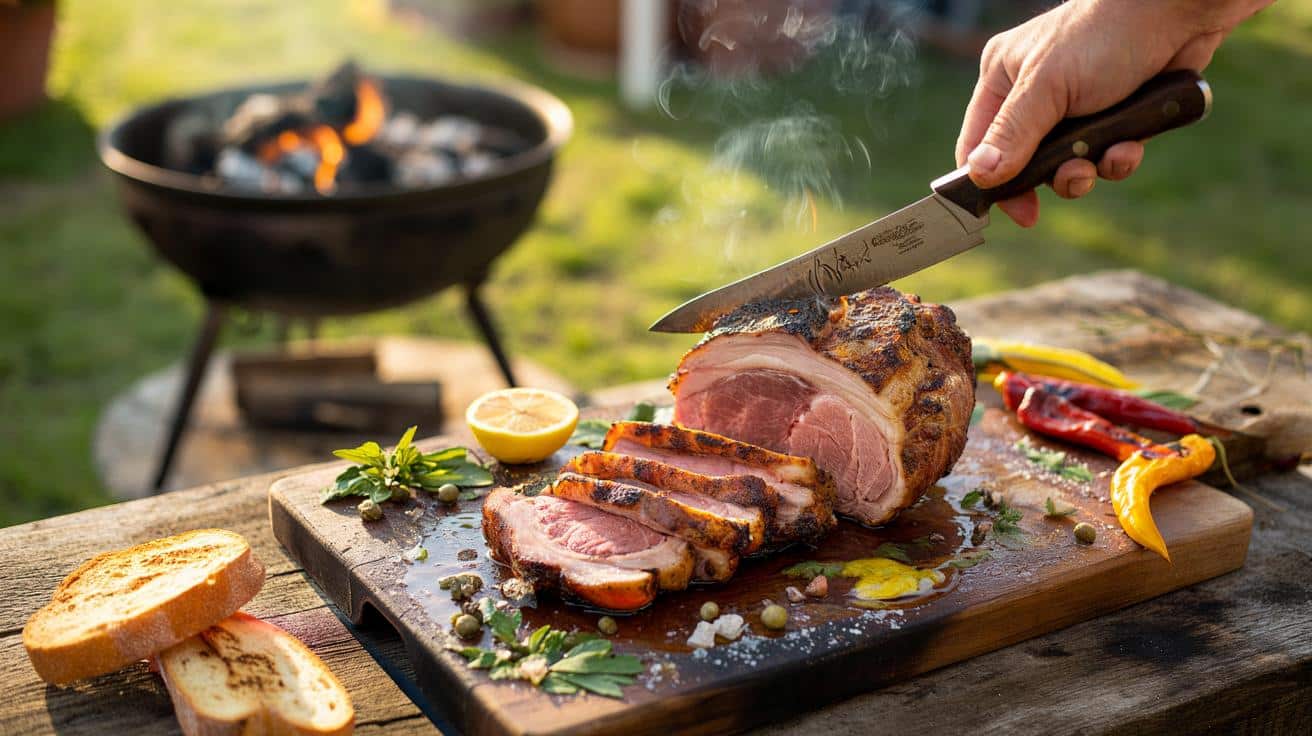
I watched a crowd go quiet after the first bite, then break into that easy laugh that only comes when food hits memory and appetite at once. No wagyu theatrics, no showy tomahawk, just an honest grill and a humble cut that cost less than a bottle of olive oil. A neighbor asked, half-whisper, “What is this?” The host just grinned, shrugged, and kept slicing into juicy pink ribbons. The tray never touched the table. It didn’t need to.
There’s a reason the old-school butchers keep smiling.
The cheap cut that steals the show
Meet **pork collar (coppa)**, sometimes labeled pork neck or shoulder collar. It’s the overlooked cousin of pork loin, richer than chops, and forgiving on the grill. Marbling laces the meat like lightning through a night sky, which means flavor first and tenderness that doesn’t fear a few extra minutes over coals. In many Italian markets, coppa is the weekday hero for a grigliata: familiar, unfussy, crowd-friendly. You slice it into thick steaks, season it like you mean it, and let fire do the charm work. Even if your timings aren’t perfect, the collar stays juicy. That’s the magic.
At a Sunday cookout last July, we threw eight collar steaks onto a medium-hot charcoal grill. Someone brought ribs, another showed up with pricey ribeye, but the platter that vanished fastest was the one with coppa. People kept hovering, dipping slices in lemony juices pooled at the bottom, then going back for “half a piece” that became two. At the supermarket down the street, coppa was running at a fraction of steak prices. No spreadsheet needed. Your wallet feels it, your guests taste it, and your ego takes a quiet victory lap.
Why does collar win? Fat marbling bastes the meat from within, while gentle connective tissue melts into silk around 60–70°C (140–160°F). Loin dries out if you look at it wrong; shoulder roast is great but needs hours. The collar sits right in the sweet spot: enough fat to stay lush, thin enough to cook fast, thick enough to carve like steak. It loves salt, garlic, citrus, and fennel. It also loves a patient approach—give it a mild indirect heat first, then a fierce kiss of flame to finish. That contrast makes fireworks.
How to grill pork collar like a pro
Start with steaks about 2.5–4 cm thick. Dry-brine with 1.5% salt by weight (15 g per kilo) for at least 4 hours, ideally overnight. Before grilling, rub with crushed fennel seed, black pepper, lemon zest, and a little smoked paprika, then a light coat of oil. Set your grill for two zones. Cook over indirect heat until the meat hits 57–60°C (135–140°F), rest 5 minutes, then sear hard over direct heat for color and edge char. Target 63–65°C (145–150°F) final. Slice thin, across the grain, and catch the juices.
We’ve all had that moment when guests arrive early, the charcoal’s late, and nerves start to buzz. Take a breath. Collar gives you a buffer because it doesn’t punish small delays. Common slip-ups: grilling only over direct heat (scorches outside, undercooks inside), skipping salt time, slicing with the grain, and crowding the grill. Keep a small safe zone with no coals beneath, rotate steaks halfway through the indirect cook, and use a thermometer without apology. Let’s be honest: nobody does this every day. You’re allowed to make it easy.
“Ask for coppa or pork collar. Tell me you’re grilling, and I’ll cut it 3 cm thick so it behaves like steak,” a veteran butcher told me, tapping the counter like a metronome. “You’ll spend less and get more smiles.”
- Ask for pork collar/coppa, 2.5–4 cm thick steaks.
- Dry-brine with 1.5% salt per kilo; add fennel, lemon zest, pepper.
- Cook indirect to 57–60°C, rest, then sear for color.
- Finish around 63–65°C; slice across the grain.
- Serve with a bright sauce: parsley, lemon, garlic, olive oil.
Serving moves that make you look like a genius
Build a simple board sauce to wake up the richness. Chop parsley, mint, and capers, then mix with lemon juice, olive oil, minced garlic, and a pinch of chili. Spoon it under the sliced meat, not just on top, so the juices marry. Pair with grilled lemon halves, blistered peppers, and a crisp fennel-orange salad. If bread is on the table, toast it over the dying coals and swipe with garlic. That little ritual feels like a secret handshake.
If you’re cooking for a mixed crowd, do two trays. One tray with classic Mediterranean flavors—fennel, lemon, rosemary. Another with a soy-honey-ginger glaze for a glaze-lacquered finish. Keep the glaze for the last minute so sugars don’t burn. Plan 250–300 g of raw meat per person if there are sides, a bit more for a meat-first crowd. And if someone asks for well-done, no eye-rolls. Collar handles it better than steak, stays juicy, and keeps the peace.
This is the backyard trick you keep for years. Use leftovers for late-night sandwiches: cold slices, tangy mustard, pickles, and crunchy lettuce on toasted bread. Or fold into a warm pasta with sautéed cherry tomatoes and herbs. For a party flourish, skewer thin slices briefly over high heat to rewarm and crisp edges. The meat forgives you. The flavor repays you. And the budget? Still smiling.
| Point clé | Détail | Intérêt pour le lecteur |
|---|---|---|
| Choisir le bon morceau | **Pork collar (coppa)**, 2.5–4 cm steaks | Prix bas, grande marge de réussite |
| Technique de cuisson | **Reverse-sear grilling**: indirect à 57–60°C, repos, saisie | Texture juteuse, croûte dorée |
| Découpe et service | **Slice across the grain**, sauce herbacée, citrons grillés | Saveur nette, présentation soignée |
FAQ :
- What exactly is pork collar?It’s the neck/shoulder cap of the pig, known as coppa. More marbling than loin, cooks faster than a full shoulder.
- How do I ask the butcher?Say “pork collar/capocollo/coppa,” cut into 2.5–4 cm steaks for grilling. If they look puzzled, ask for the shoulder neck end, steak-cut.
- Charcoal or gas grill?Both work. Set two zones, go indirect to temp, then sear. On gas, use one burner low, one high; on charcoal, bank coals to one side.
- Marinade or dry rub?Dry-brine with salt first. Add a quick rub before the cook. If marinating, keep it short and bright—citrus, garlic, herbs—to avoid masking the pork.
- What’s the ideal doneness?Pull around 57–60°C (135–140°F), rest, then sear to finish at 63–65°C (145–150°F). Juicy, safe, and sliceable.