On the grill, they turn into glory. The one Italians quietly adore has been hiding in plain sight at your butcher’s counter.
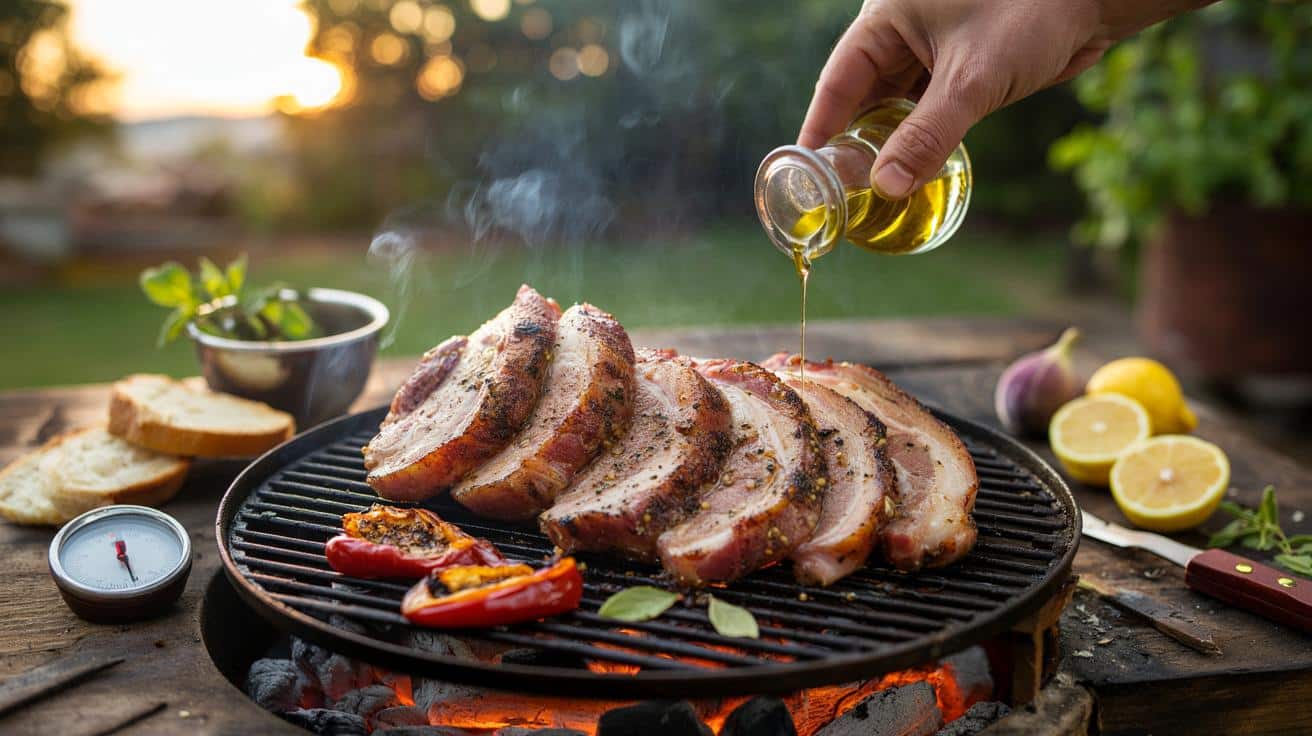
Smoke rolled low over the backyard fence as the sun slipped behind a neighbor’s fig tree, and someone asked the question everyone asks: “What cut is that?” I said “pork collar,” and watched skepticism change to curiosity, then to hunger, as the fat began to hiss and paint the grates in gloss. The first slice bled juice like a small miracle—rosy, tender, and edged with a shy char that tasted of lemon, fennel, and summer evenings we thought would last forever. We’ve all had that moment when a so‑called cheap cut shows up the fancy stuff. A plate went quiet. Eyebrows lifted. Then a grin, and another. Call it coppa, neck, or the butcher’s secret. One bite tells a different story. And it’s not the one you expect.
Don’t call it scraps: meet pork collar, the grill’s underdog
Pork collar sits between the shoulder and the head—marbled like a small ribeye, priced like a weeknight gamble. It’s the cut you walk past, because packaging rarely flatters it, and marketers can’t decide what to call it. In Italy, it’s coppa; in Japan, tontoro; in the UK, neck fillet; in the US, collar or Boston butt cap. **Pork collar is the ribeye of the pig—tender, marbled, and forgiving.** On a grill, that marbling melts, bathing the meat from the inside out. The result is deeply savory, slightly sweet, and velvety in the middle, with edges that brittle into a bittersweet crust.
I met a butcher in Modena who sold collar by the kilo to people who looked like they knew something the rest of us didn’t. He sliced it into wide, thumb-thick ribbons, tossed them with lemon zest, cracked pepper, fennel seeds, and olive oil, then sent them to the grill alongside peppers and torn bread. No ceremony. Just fire. Those ribbons cooked fast, flipped once, and ate like a steak that had decided to relax. Back home, I tried the same thing on a wobbly kettle grill in a small city yard. Same result: sighs, silence, and plates scraped clean.
Why does this “underdog” behave like royalty over coals? Collagen and fat—nature’s basting system. Collar comes from a part of the animal that does real work, so it carries flavor. The fat is fine-grained and well-distributed, melting into the muscle at grilling temperatures to keep things juicy. You can cook it hot and fast in slices, or as a small roast with a two-zone fire and a gentle finish. Either way, the payoff is incredible value per bite and a texture that lands in the sweet spot between springy and plush.
How to grill pork collar so it sings
Use a two-step approach: dry brine, then high-heat kiss. Salt the collar at 1.5% of its weight (15 g salt per kilo), add cracked black pepper and crushed fennel seeds, and rest it uncovered in the fridge for 6 to 24 hours. Before grilling, swipe it with a quick salmoriglio: lemon juice, lemon zest, chopped oregano, a grated garlic clove, and good olive oil. Get your grill to medium-high and set up two zones. Sear directly over the heat to build a caramelized edge, then move it to the cooler side to coast to a blush inside, 145°F/63°C at the thickest point.
The biggest wins come from small habits. Pat the surface dry right before it hits the grates—dry meat browns, wet meat steams. Keep the lid down while the collar rests on the cool side to avoid flare-ups and maintain steady heat. Slice across the grain after a 10-minute rest, letting the juices relax back into the fibers instead of running straight onto the board. Let’s be honest: nobody nails perfect timing without a thermometer on a breezy evening. Use one. It frees your brain to enjoy the moment.
Most people over-marinade collar or cut it too thin. Go for 2–3 cm slices if you want fast grilling, or leave it whole for a small roast. Don’t drown it in sugar-heavy glazes early—save sweet elements for the last minute to prevent scorching.
“The collar forgives your mistakes,” my butcher said with a shrug, “but it rewards your patience.”
- Quick rub: 2 tsp kosher salt per pound, 1 tsp cracked pepper, 1 tsp crushed fennel, ½ tsp chili flakes.
- Finish: spoon on lemon-oregano oil after slicing to wake up the fat.
- Gear tip: a cheap instant-read thermometer beats guesswork every time.
- Safety: aim for 145°F/63°C and give it a 3-minute minimum rest.
A cut that changes how we grill—and how we think
There’s a quiet joy in taking a “lesser” cut and giving it a stage. Collar costs less than premium chops and keeps more people fed without sacrificing the drama of a good sear. **In a world where roughly a third of food is wasted, choosing flavorful secondary cuts is a small, delicious vote for sanity.** It’s also more fun. The fat sings, the edges crisp, and the center stays tender even if your evening runs long and someone tells a story you don’t want to interrupt. *Call it collar, coppa, or neck—just don’t call it scraps.* When it hits the grill, it hits like memory: smoky, bright, a little messy, very alive.
Maybe this is what a better backyard looks like—less pressure, more flavor, a table that doesn’t need a centerpiece because the platter already glows. The cut invites improvisation: herbs from a pot, a lemon rescued from the crisper, a hunk of bread toasted in the fat. **This is the cut that turns a Tuesday into a festival.** If you try it and love it, you’ll talk about it the way fans talk about a band before they were famous. You’ll watch friends take the first bite, then the second, and smile when they ask, “Wait… what was that called again?” It’s called respect, cooked over fire.
| Point clé | Détail | Intérêt pour le lecteur |
|---|---|---|
| Pork collar’s marbling | Fine, even fat that bastes the meat as it cooks | Juicier results with less effort than lean cuts |
| Two-zone grilling | Sear over high heat, finish gently to 145°F/63°C | Predictable doneness, char without drying out |
| Simple Mediterranean flavors | Salt, fennel, lemon, oregano, olive oil | Bright, crowd-pleasing taste using pantry staples |
FAQ :
- Is pork collar the same as coppa?Yes. Coppa (Italy), neck fillet (UK), and collar (US) refer to the same general cut from the upper shoulder/neck.
- Can I cook it whole instead of in slices?Absolutely. Treat it like a small roast: sear, then move to indirect heat until it hits 145°F/63°C, rest, and slice across the grain.
- What if I don’t have a thermometer?Use the touch test and a small test slice, but a basic instant-read thermometer is inexpensive and removes guesswork.
- Best marinade or rub for beginners?Salt, black pepper, crushed fennel seeds, and lemon zest. Finish with lemon juice and olive oil after cooking for brightness.
- Can I make it on a stovetop?Yes. Use a cast-iron skillet to sear, then finish in a 375°F/190°C oven to target temperature for a similar result.