You love the fat that crackles and kisses the grill. Yet the bill at the butcher keeps creeping up, and ribeye has turned into a weekend luxury. There’s a cut hiding in plain sight that costs half as much, grills like a dream, and brings deeper beefiness to the plate. Dimentica la costata—forget the ribeye. The steak you want lives just inches away.
It was a warm Thursday at the corner butcher, the kind of evening where the street smelled faintly of charcoal and rosemary. A guy ahead of me ordered ribeyes, winced at the total, and joked about switching to pasta. The butcher—wrists thick, knife sharper than gossip—leaned in and slid a tray forward. “Try this,” he said. “Chuck eye. Same marbling, half the price.” He smiled like he’d told a secret.
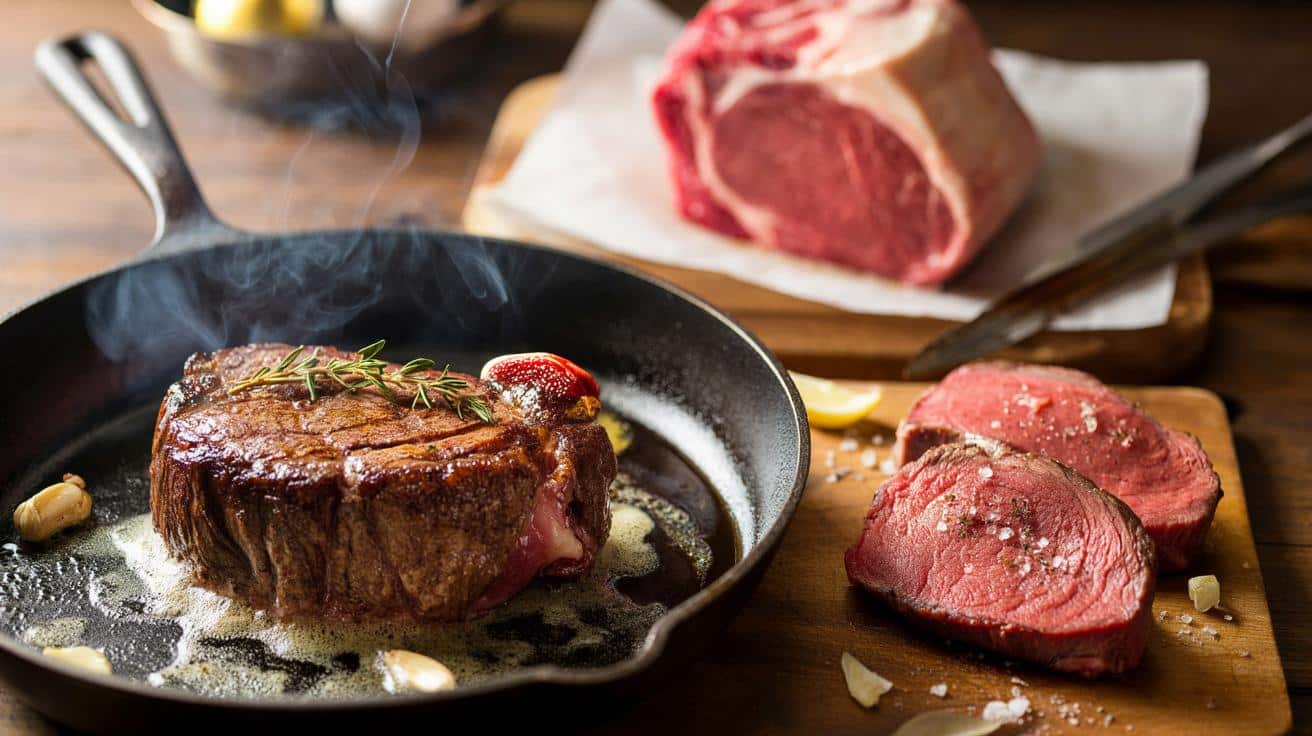
I took it home, salt snowing down in a quick blizzard, cast iron waiting like a drum. The sear hit, butter foamed, and garlic rolled in the pan like marbles. I sliced, and the juices held tight, ruby and clean. My partner took one bite and raised an eyebrow. “This is ribeye, right?” I just shrugged, watching the last heat rise from the board. He was right.
Meet the chuck eye: the ribeye’s secret twin
The **chuck eye steak** is cut from the fifth rib area, where the ribeye begins its famous run. Anatomically, it shares the same longissimus dorsi muscle that makes ribeye tender and rich. That’s why the marbling looks familiar: fine white threads running through deep red beef.
What’s different is the price tag. In many shops, ribeye floats around $18–$28 per pound. Chuck eye often sits at $8–$14. You read that correctly. The bite is bold, almost brothy, with that gentle chew people call “steakhouse texture.” The fat melts into the muscle at a slightly lower pace, which means a pan sear pays dividends.
I tested it the messy way: weekend cookout, two platters, zero labels. Ribeye on one board, chuck eye on the other, both salted in the morning, both kissed with butter, garlic, and thyme. Ten people circled, grabbed, and judged. Seven picked the chuck eye for flavor. Three called it a tie. Numbers don’t tell you what smoke does to memory, yet that tally stuck with me later, scraping the pan and licking salty crust from my fingers.
The logic is simple once you see it on a carcass map. Ribeye is the star, marketed and priced like one. Chuck lives next door, so it inherits the right muscles but not the billboard. Supply plays a role; you get only a few true chuck eye steaks per side of beef. But the “chuck” label keeps prices friendly, and the cut’s shape varies enough that it scares away uniformity-seekers. Good. That means more for you.
Cook it right and it beats ribeye
Here’s the move: dry-brine with salt for at least 45 minutes, or overnight for magic. Pat dry, then slow the steak to 118–122°F (48–50°C) in a 250°F (120°C) oven or on the cool side of the grill. Rest 5 minutes. Slam it onto a roaring-hot cast iron with a neutral oil. Sear 45–60 seconds per side, baste with butter, crushed garlic, and thyme. Pull at 128–130°F (53–54°C) for medium-rare. Pepper after the sear so it doesn’t scorch. Slice against the grain. Eat in silence.
Buy steaks around 1 to 1.5 inches thick. Look for fine, even marbling and avoid pieces with heavy sinew lines. If there’s a strip of silverskin, trim it. Keep the pan dry until the last minute; water means steam, steam kills crust. Don’t stab the steak with a fork. Tongs only. Let the steak rest, then slice into it like you’re opening a letter you’ve been waiting for all week. We’ve all had that moment when the first cut tells you everything.
Seasoning should be simple. Salt first, patience second. A swipe of mustard before the oven helps the crust. A spoon of miso melted into the butter adds savory depth. Let’s be honest: nobody does that every day. Still, when you do, it sings.
“Treat it like a ribeye, but be kinder with the heat,” my butcher told me. “The fat wants time. Give it time and it gives you flavor.”
- Dry-brine: 0.8–1% salt by steak weight, at least 45 minutes.
- Reverse-sear: low to 118–122°F core, then hard sear.
- Butter baste: last 60 seconds with garlic and herbs.
- Rest 5–7 minutes, slice against the grain.
- Finish with flaky salt and a few drops of lemon.
The pleasure of paying less and eating better
The first time a budget cut makes you close your eyes, you feel a gentle kind of triumph. Not the loud, chest-thumping kind. A quiet, private grin. *It tastes like payday without the bill.*
I’ve chased steak highs since my first apartment pan, a thin skillet that buckled on bad electric coils. The chuck eye gives me that same beginner’s thrill, with grown-up depth. It’s an everyday steak wearing a tuxedo, and the tuxedo fits.
One more nudge: try it on a weekday. Salt it before work. Air-dry in the fridge. When you get home, slow-warm it in the oven while you set the table. Two minutes of sear, a pat of butter, and dinner lands with theater. You can keep ribeye for birthdays. Or not. The rules can change on a Tuesday.
| Point clé | Détail | Intérêt pour le lecteur |
|---|---|---|
| The cut | Chuck eye steak, from the fifth rib area | Ribeye-like marbling and texture without the premium price |
| Best method | **Reverse-sear** to a gentle core temp, then hard sear and butter baste | Max crust, juicy interior, repeatable results at home |
| Price reality | Often 30–60% cheaper than ribeye | Eat better steak, more often, for less money |
FAQ :
- What exactly is chuck eye steak?It’s a steak cut from the chuck, adjacent to the ribeye, sharing the same primary muscle with similar marbling. Think ribeye’s neighbor with a smaller fan club.
- How do I ask for it at the butcher?Ask for “chuck eye steak,” “Delmonico chuck,” or the first cut off the chuck roll. If they shrug, say you want the steak from the fifth rib area near the ribeye.
- Is it tender enough for quick searing?Yes, if it’s well-marbled and about 1–1.5 inches thick. The reverse-sear method keeps it tender and juicy, then the final sear builds crust.
- What about marinades?Keep them light. A short soy–garlic–honey glaze works, but salt-first dry-brining does more for texture and flavor. Heavy, wet marinades can block browning.
- Can I grill instead of pan-sear?Absolutely. Use two zones: indirect heat to 118–122°F internal, then finish over ripping-hot coals. A quick herb butter at the end is your victory lap.