While prime steaks keep climbing in price, flavor isn’t obliged to follow their lead. The answer hides in a strip of muscle few people ask for by name.
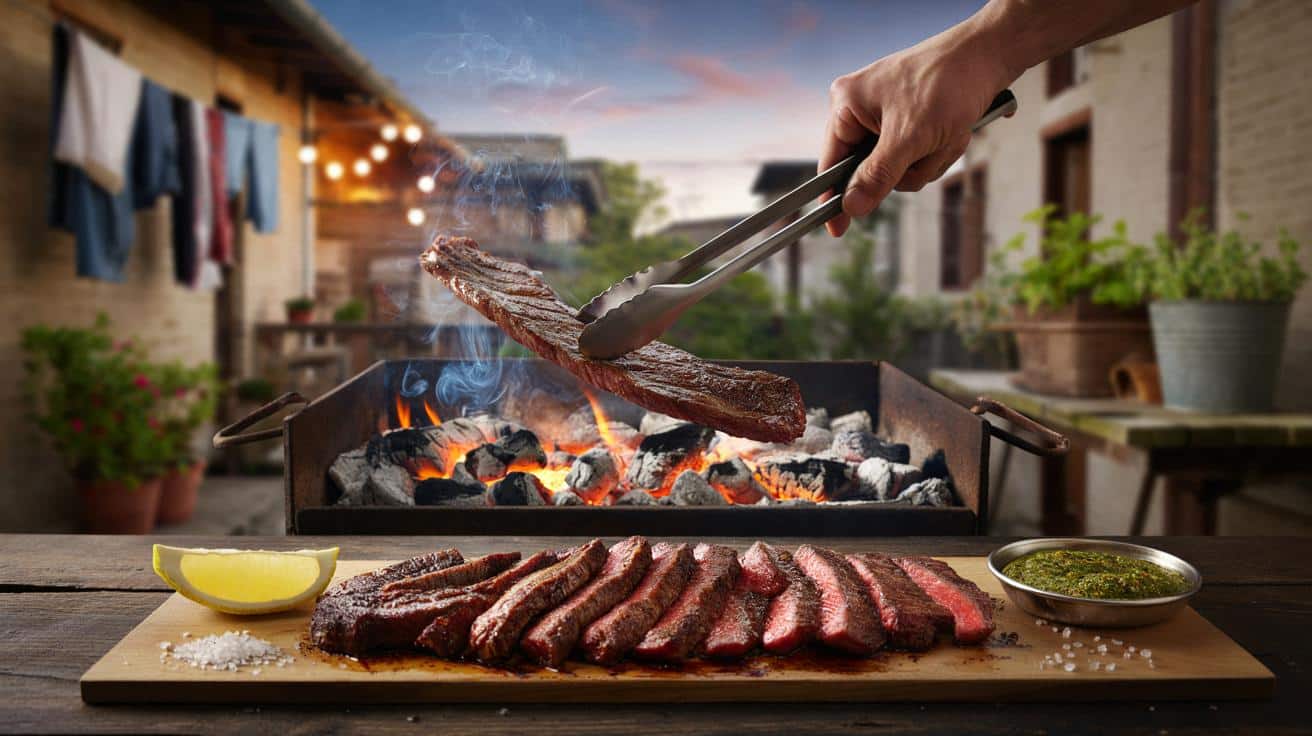
I was standing by a small charcoal grill behind an apartment block, the kind with laundry lines overhead and coriander sprouting in coffee tins. A friend unwrapped a long, dark ribbon of beef—skirt, he said, the diaphragm—salted hours ago and dry as a paper fan. The coals pulsed orange. He lowered the meat close, almost reckless, flipping with tongs every half-minute like he was fanning a flame. Neighbors leaned over the railing. Someone passed lemon wedges down on a plate. The first slice landed on my palm, bleeding warmth, edges crisp, heart vivid and loose. People went quiet, then noisy again.
The trick was almost invisible.
The “poor” cut that rules the grill
Skirt and hanger look scrappy in the butcher’s case. Long fibers, ragged edges, that thin membrane clinging like cling film. Raw, they seem stubborn. On charcoal, they transform. The coarse grain turns into a roadmap for slicing. The fat sizzles into a lace of flavor. Smoke grabs these cuts faster than it ever does a thick fillet, riding the ridges, painting the crust. They don’t need gentleness. They need heat and speed.
At a late-night stand in Milan, I watched a cook slap diaframma on a grate so hot it hissed like rain on a tin roof. He flipped fast, no timer, just the twitch of his wrist. Two minutes. Maybe three. He sliced across the grain, showers of juice hitting the board, and scattered salt and lemon. People ate standing up, over paper plates, smiling. The price was modest, the line wasn’t. Great grills don’t demand luxury. They demand nerve.
Why it works comes down to muscle math. Skirt and hanger live near the diaphragm, which means long, well-worked fibers with deep beef flavor. They’re thin, so the outside browns before the inside overcooks. Cooked hot and fast, collagen doesn’t have time to toughen, and fat blisters into that nutty char everyone chases. Slice them thin across the grain, and each bite shortens those long fibers into tender little ribbons. **High heat, short time, ruthless slicing.** That’s the whole poem.
From butcher paper to blazing coals: the method that never fails
Start with trimming. Peel off the silver membrane if your butcher left it, or it will tighten and chew. Salt early—at least 45 minutes, up to overnight in the fridge on a rack—and let the surface dry. If you want marinade, keep it short and smart: olive oil, a squeeze of citrus, garlic, smoked paprika, cracked pepper. Twenty to thirty minutes is plenty for skirt. Pat dry before the grill. Build two zones over charcoal, one volcanic hot and one cooler. Heat the grate until it almost glows. Sear close to the coals, flipping every 20–30 seconds, until the outside is browned and the center feels bouncy: 52–54°C (125–130°F) for juicy. Rest three minutes. Slice thin at a 45-degree angle, across the grain.
We’ve all lived that moment when the guests are already pouring wine and the coals are peaking. Skirt is your ally then. The biggest trap is water: wet meat steams, it doesn’t brown. Another trap is sugar-heavy marinades that burn before the crust forms. Go easy on honey and glaze only at the end if you must. Don’t crowd the grill; give each strip its runway. And when it looks perfect, remember it will climb a notch while resting. **Cut against the grain or don’t bother.** Let the board tilt so juices don’t drown the crust.
There’s a quiet confidence to this cut once you’ve done it twice. Smoke does the talking. A good pitmaster told me something that stuck.
“A tough-looking cut only needs heat and respect. Rush the first and you lose the second.”
- Salt early: 1.5–2% of the meat’s weight for balanced seasoning.
- Dry hard: rack + fridge air overnight if you can, or 20 minutes under a fan.
- Flip often: little flips make big crusts without overcooking.
- Finish temp: 52–54°C for beef skirt or hanger; go 60°C if you like it less pink.
- Slice: 3–5 mm thick, knife angled, fibers cut short.
What this “poor” cut teaches us about fire
Skirt and hanger remind you that flavor isn’t a budget line. It’s timing, touch, and the courage to cook hotter than feels comfortable. **Heat is a seasoning.** It creates that roasted, almost sweet crust that makes a squeeze of lemon feel like a small miracle. The sides don’t need to be fussy—charred spring onions, flatbread warmed at the edge of the coals, a quick chimichurri stirred in the bowl you used for resting juices. Let the meat bring the drama; let the table bring the calm.
Let’s be honest: nobody really does that every day. Work, kids, weather, whatever—life decides. That’s why this cut feels special. It waits for you. It doesn’t demand a four-hour window or a spreadsheet of steps. It gives you speed and generosity, and it forgives small slips. Share it with someone who thinks only ribeye can be royal and watch their face change. Then send them home with a shopping note: “Skirt. Or hanger. Ask the butcher.”
| Point clé | Détail | Intérêt pour le lecteur |
|---|---|---|
| Choose the cut | Skirt (outside if possible) or hanger; remove membrane | Better texture and richer beef flavor for less money |
| Salt early, dry hard | 45–90 minutes minimum; overnight on a rack is gold | Deep seasoning and crisp, smoky crust |
| Sear, rest, slice | Flip often over roaring coals; rest 3 minutes; slice across grain | Tender bites with bright juices and zero chew |
FAQ :
- Which “poor” cut should I ask for?Skirt steak (diaframma) is the classic; hanger (onglet) is a close cousin. Both love blazing heat and quick slicing.
- Do I need a marinade?No. Salt and dry time do the heavy lifting. A short, punchy marinade adds perfume, not tenderness. Keep acids brief—20–30 minutes for skirt.
- Gas or charcoal?Charcoal wins for aroma and crust, though gas can work if you preheat longer and use a cast-iron grate. Add a chunk of oak or cherry to charcoal for a clean kiss of smoke.
- What internal temperature should I target?52–54°C (125–130°F) for juicy and bouncy. Go to 57–60°C (135–140°F) if you want it less pink. Rest briefly before slicing.
- Why is my skirt steak tough?Two common reasons: it overcooked, or it was sliced with the grain. Chill a minute, then cut thinner, at an angle, across the fibers to fix the bite.