You don’t need a prime ribeye or a seven-hour brisket to win the backyard. The most forgiving, wow-inducing barbecue cut is sitting quietly in your butcher’s case, cheap, marbled, and waiting for a sharp knife and a patient fire.
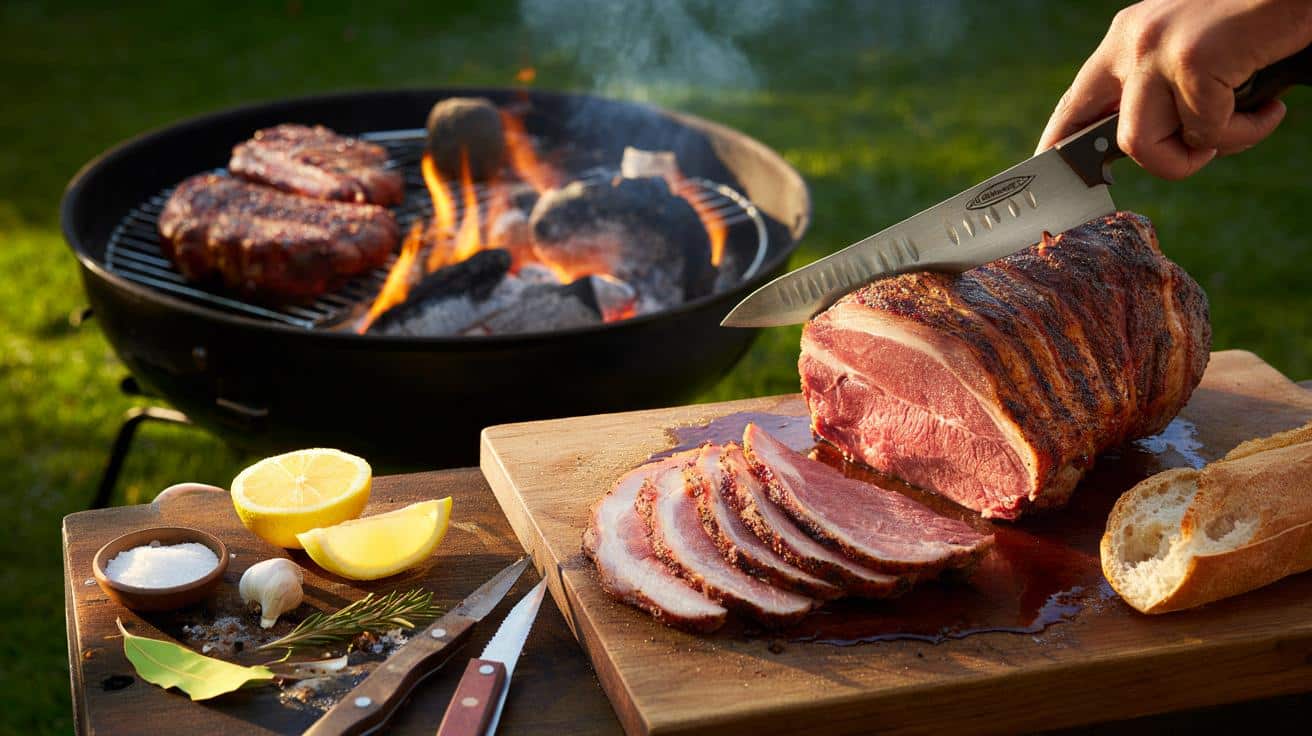
Late Saturday, market buzzing, charcoal dust on my shoes, he drew a clean line across the grain and a ribbon of fat winked in the light. People were grabbing burgers and drumsticks. I asked for two inches of that, please. He smiled the way people smile when you’ve just joined a little secret club. Back home, the neighborhood drifted toward the smell before I’d even flipped the first steak. The juices pooled, then vanished into warm bread like rain into dry soil. The trick isn’t fancy. It’s knowing what to cut and how to cut it. The clue is in the grain.
The underrated hero: pork collar (coppa)
Let’s get this out there: **pork collar (coppa)** is the sleeper hit of summer grilling. It runs from the pig’s shoulder toward the neck, laced with intramuscular fat and shy streaks of connective tissue. That marbling is your insurance policy on high heat. It bastes itself as it cooks, turning simple seasoning into something people remember weeks later.
I tested it side by side with pork loin and chops—same rub, same charcoal, same time window when guests “arrive hungry.” The collar steaks came off blushing at 63°C (145°F), rested, then sliced like buttered toast. Loin dried out after two minutes too long. Chops needed a sauce to feel alive. The collar didn’t. A friend who swears by tenderloin asked where I’d sourced the “fancy cut.” I pointed at the budget shelf. He laughed, then took the last piece without talking.
Why it works comes down to design. Collar carries fine seams of collagen that loosen with heat, plus fat that melts right when the surface gets smoky and crisp. That balance gives it range: quick hot-and-fast steaks, reverse-seared slabs, or low-and-slow until pull-apart tender. The grain runs lengthwise, so your mission is to interrupt it—slice across it—to shorten those muscle fibers. When you cut it right, the chew turns from “hmm” to “oh.” The science is small, the difference is big.
Cut like you mean it
Start with a chilled piece, about 1–1.3 kg if you can find it. Trim only thick external rind or silver skin; leave the fine fat. Turn the roast so the long fibers point left to right across your board. Now **slice across the grain**, not along it: for steaks, go 2–2.5 cm thick; for skewers, go 1–1.5 cm and thread loosely. Sprinkle salt 45–60 minutes ahead or dry brine overnight. Pat dry, pepper at the grill, and let the fire kiss it fast.
Common mistakes are simple and totally fixable. Over-marinade drowns the meat; go light with acid, heavy with salt and aromatics. A dull knife tears the fibers and you lose juice before you even light the coals. We’ve all had that moment when the grill goes quiet and you realize you’ve sliced with the grain, and now it chews like gum. Breathe, rotate the piece, try again. Let’s be honest: nobody really tests their instant-read thermometer batteries every weekend.
There’s a reason butchers talk about collar with a half-smile: it makes you look good without trying too hard. Season simple, cut clean, and use heat to build bark and bounce. The first slice told the story.
“Good barbecue is 50% how you cut, 40% how you manage heat, and 10% everything else.”
- Best thickness for steaks: 2–2.5 cm across the grain.
- Target doneness for juicy slices: 63°C (145°F) plus a short rest.
- Reverse sear for thick slabs: 120–135°C (250–275°F) to 57°C (135°F), then sear to finish.
- Low-and-slow pulled collar: 88–93°C (190–200°F), rest and shred.
- Seasoning lane: salt + pepper + garlic powder + lemon zest = bright and deep.
Fire, time, and the little things people notice
Think in zones. Bank charcoal to one side for a two-zone setup: one hot, one cool. Start collar steaks “cool” to bring them up evenly, then finish over ripping heat for a 60–90 second sear each side. If you’re using gas, preheat hard, kill one burner, and play the edges. You’re building a crisp edge and a calm center.
Moisture management is your quiet superpower. Dry the surface, oil the grate not the meat, and don’t crowd—steam is the enemy of crust. Rest on a wire rack, not a plate, so the bottom doesn’t stew in its own juices. Then slice at a slight diagonal across the grain, pencil-width slices for sharing. A squeeze of lemon wakes the fat like opening a window.
Looking beyond pork? The same principles unlock other undervalued gems. **Bavette (flap steak)** loves a hot kiss and thin cross-grain slices. Lamb neck fillet turns silk-sweet around 57–60°C (135–140°F). Turkey thigh steaks carry dark-meat swagger without drying out. Different animals, same map: marbling plus grain plus heat. It reads like a quiet recipe for repeatable joy.
Here’s the open secret: it’s not about chasing the fanciest cut, it’s about choosing one with built-in forgiveness and cutting it like you understand its language. That’s why pork collar keeps showing up at award-winning backyard tables and small city grills that sell out by dusk. It’s **juicy, smoky, affordable**—and it invites you to improvise. Try a lemon–fennel rub one week, go miso–ginger the next, or skewer thin slices with bay leaves like a seaside trattoria. Share the method, trade notes, argue a little about wood choice. The best barbecues end with a plate of odd slices everyone fights over and a promise to meet again soon.
| Point clé | Détail | Intérêt pour le lecteur |
|---|---|---|
| Choose the cut | Pork collar/coppa with visible marbling and tidy fat seams | More flavor, more forgiveness, lower cost |
| Cut across the grain | 2–2.5 cm steaks or thin slices for skewers | Tender chew and better texture every time |
| Cook in zones | Two-zone fire, rest on a rack, slice warm | Consistent doneness, crisp crust, juicy center |
FAQ :
- What exactly is pork collar/coppa?It’s the well-marbled muscle running from the shoulder toward the neck, prized in charcuterie and, frankly, a sleeper for grilling.
- How thick should I cut it for steaks?Go 2–2.5 cm across the grain. Thinner risks dryness; thicker benefits from a brief indirect warm-up before searing.
- What internal temperature should I target?For juicy slices, pull at 63°C (145°F) and rest a few minutes. For shreddable, take it to 88–93°C (190–200°F) low-and-slow.
- Do I need a marinade?Not required. Salt early and keep flavors simple. If marinating, skip long acidic baths; 30–90 minutes is plenty for surface flavor.
- Can I do this on a gas grill?Yes. Create a hot and a cool zone, preheat thoroughly, lid down between flips, and finish with a quick sear to build crust.