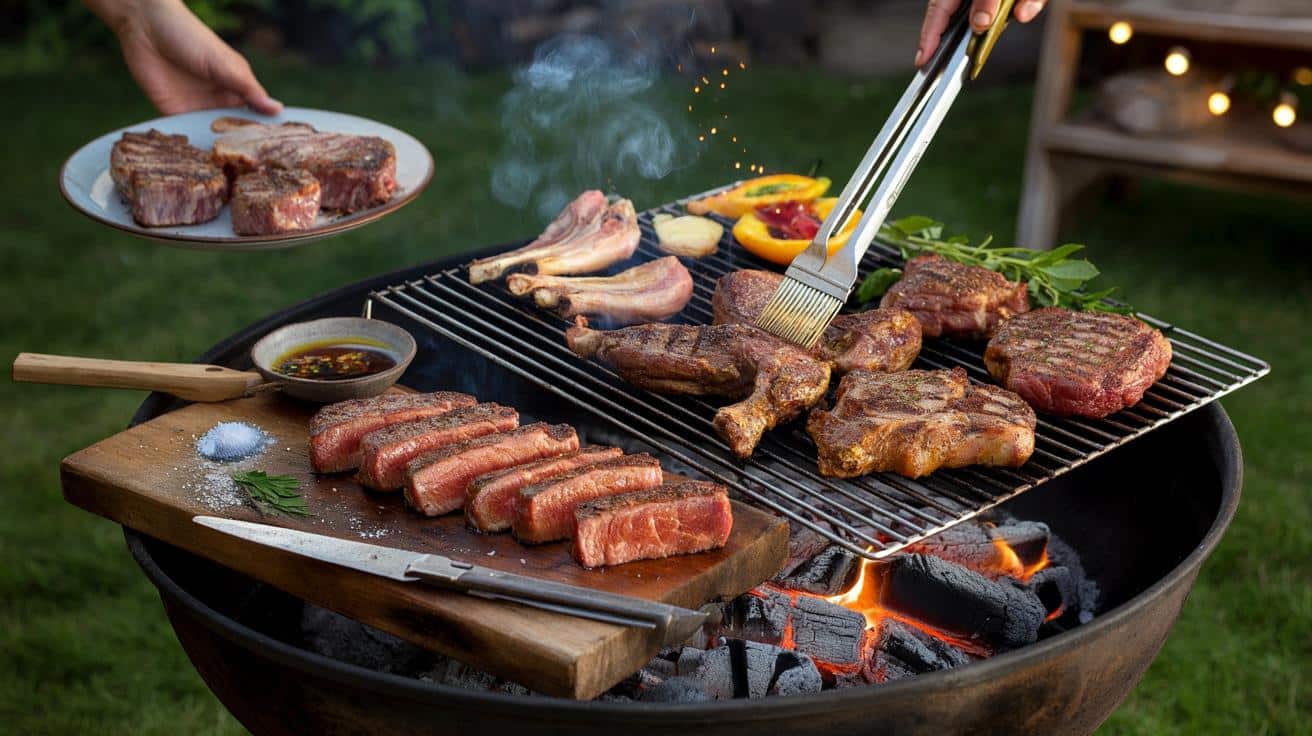
You want that deep, beefy bite, the kind that makes a plate go silent, without paying steakhouse money. This is how to grill quality meat while spending almost nothing.
The last warm evening of summer, a neighbor rolled out a dented kettle grill like it was a family heirloom. The coals glowed low and steady, kids chased soap bubbles, and a cheap radio fought the cicadas. He laid down two cuts I couldn’t name, nothing fancy, and the first hiss made heads turn. People drifted closer, plates in hand. I asked where he found steaks that taste like this for half the price. He shrugged, flipped once, and sliced on a board in thin ribbons that shimmered with juice. Someone whispered, “Ribeye?” He just smiled.
Buy for flavor, not fame
Prestige cuts get headlines, but the bargains hold the stories. Chuck eye, flat iron, bavette, hanger, and skirt are butcher darlings that still fly under the radar. Pork shoulder steaks, lamb shoulder chops, and chicken thighs? Low-cost, high-reward, built for flame. Pay for intramuscular fat and grain direction, not a fancy name.
Hit the butcher late on a Saturday and watch the price tags twitch. Near-date markdowns can drop 20 to 40 percent, and butchers often keep “end-of-roast steaks” from chuck or sirloin that sear like champs. Swap ribeye for chuck eye and you’ll often save 40 to 60 percent with similar marbling. In many regions, tri-tip sits at $7–10 per pound while strip runs $16–22. Those numbers taste even better with smoke.
Why do these cuts work on the grill? They’re lined with flavor-carrying fat and collagen that soften with heat and time. You don’t need hours. A smart sear, a short coast on the cool side, and a sharp knife do most of the magic. Slice thin and across the grain and tougher fibers turn tender on the tongue. Value meets technique, right over the fire.
Technique that turns cheap into wow
Salt early. Aim for 0.8 percent salt by weight, or roughly 1/2 teaspoon Diamond Crystal kosher salt per pound, and let it sit uncovered in the fridge for 4 to 24 hours. Build a two‑zone fire: coals piled on one side, a cool side on the other. Sear hard over the hot zone, finish to temp on the cool zone with the lid down, rest, then slice thin at a 45‑degree angle across the grain. Done.
We’ve all had that moment when a bargain cut chews like a rubber band and morale dips with each bite. Keep leaner cuts at medium or below, glaze with sugar right at the end, and don’t drown meat in acid for hours or it turns mushy. Quick marinades shine: soy, garlic, a splash of vinegar, 30 to 90 minutes. Flip often over high heat to manage flare-ups. Let’s be honest: nobody does that every day.
Real flavor starts with heat control, not a fancy cut. Think process, then product. If you can run a steady fire and respect the grain, your “cheap” steak becomes the plate everyone photographs.
“Buy what others ignore, cook it with attention, and you’ll eat better than the guy who paid double,” said a butcher named Luca, handing over a wrapped slab of flat iron like a secret.
- Hero cheap cuts for grilling: chuck eye, flat iron, bavette/flap, skirt, hanger, pork shoulder steaks, lamb shoulder chops, chicken thighs
- Two‑zone rule of thumb: sear 60–90 seconds per side, finish indirect to target temp
- Quick marinade template: 3 parts soy, 1 part acid, aromatics, 30–90 minutes
- Slice tip: thin, across the grain, on a slant for tenderness
The budget mindset on the grill
Portion differently and you win twice. Grill a whole bavette or pork coppa, then slice and pile on a board with charred peppers and onions, and 6 ounces per person feels generous. Buy whole primals when you can, cut your own steaks, and freeze in meal-size packs for the month. Skewer strategy stretches flavor: thread cubes with mushrooms and scallions, brush with a soy-butter glaze, and the umami carries every bite. Wood chunks over charcoal add steakhouse aroma for pennies. Leftovers become next-day heroes—cold steak with lemon and herbs, or chopped pork shoulder in tacos that taste like a vacation. Spend on versatility once, eat like royalty twice.
Some nights the grill is less about recipes and more about small choices that stack up to something better. The cut that’s overlooked. The salt that goes on early. A fire you can read by sound. What looks cheap at the counter can rise to the occasion, and the stories that follow taste as good as the meat. Share the board, pass the tongs, and watch how quickly the “cheap cut” becomes the memory everyone keeps.
| Point clé | Détail | Intérêt pour le lecteur |
|---|---|---|
| Choose undervalued cuts | Chuck eye, flat iron, bavette, skirt, pork shoulder steaks, chicken thighs | Steakhouse flavor at supermarket prices |
| Run a two‑zone fire | Sear over high heat, finish indirect with lid, rest, slice across grain | Predictable tenderness without special gear |
| Salt early, slice smart | 0.8% salt by weight; thin, angled cuts across the grain | Transforms “tough” into tender, juicy bites |
FAQ :
- What are the cheapest cuts that still shine on the grill?Chuck eye, flat iron, bavette/flap, skirt, and hanger for beef; pork shoulder steaks and coppa; lamb shoulder chops; and chicken thighs. These cuts carry marbling or collagen that deliver flavor and stay forgiving over live fire.
- How do I tenderize without wrecking texture?Salt early and let time do the work. Use quick marinades (30–90 minutes) with soy and mild acid, not overnight acid baths. Finish by slicing thin across the grain on a slant to shorten fibers in every bite.
- Charcoal or gas if I’m on a budget?Both can be great. Charcoal adds smoke cheaply with wood chunks, while gas nails consistency and low waste. If using gas, add a smoker box or foil packet with wood chips and keep at least one burner low for an instant cool zone.
- How do I stop flare-ups with fatty bargain cuts?Set a two‑zone grill so you can move meat off the flames. Trim big surface fat, keep the lid on to starve flare-ups of oxygen, and flip often over the hot side. Brush sugary sauces in the last minute only.
- What’s the smartest way to buy markdown meat?Shop late, look for intact packaging and cold cases, and freeze the same day in portions. Label with cut and date, push out air, and thaw overnight in the fridge. Pat dry, salt early, and your discounted cut will cook like a premium pick.